How to organize hand-me-down clothes so the next size is easy to find
· Editorial team atlantanewsdaily7.com
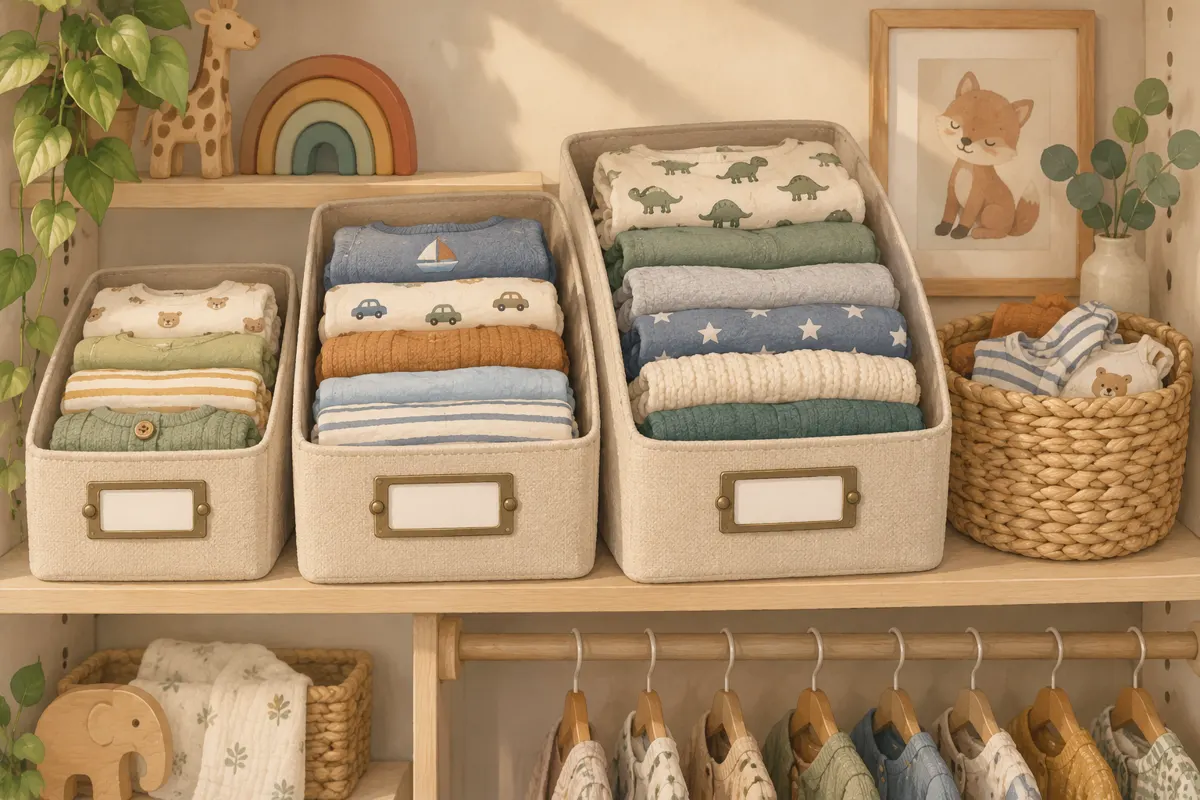
Sort hand-me-down clothes by the size on their labels, separate seasonal items within each size, and mark every container where you can see it. Keep the next size within easy reach and use a separate basket for clothes your child has just outgrown. This gives incoming, stored, and outgoing clothes a clear place.
Choose what is worth keeping
Before sorting, decide who the clothes are for. A named child or a clear destination makes it easier to judge what deserves storage space. If you are holding items without a likely recipient or a useful time frame, consider passing them along now.
- Gather one manageable batch of clothes and check each piece for stains, holes, worn elastic, and missing fasteners.
- Keep usable items that the next child is likely to wear. Consider their preferences as well as the garment’s condition.
- Set aside clothes intended for another household so they do not get mixed into your family’s stored sizes.
- Separate sentimental pieces from everyday hand-me-downs. Give keepsakes their own designated space.
Avoid packing an unresolved pile. If a garment needs a repair, decide whether you will do it before storing the item. Keeping only clothes that are ready for their next wearer makes the eventual wardrobe change simpler.
Sort by size, then separate seasonal clothes
Make a pile for each labeled size before choosing containers. Keep the size wording intact: an item marked 24 months belongs in that group, while one marked 2T goes in the 2T group. If a label is missing or unreadable, set the garment aside for a fit check instead of guessing and burying it in a bin.
A practical proposal is to divide each size into warm-weather clothes, cool-weather clothes, and year-round basics. Use separate bags or dividers inside one container when the piles are small. Create separate seasonal containers only when you have enough clothing to justify them.
- Group similar items together so shirts, pants, and pajamas are easy to scan.
- Keep matching outfits together if you intend to use them as a set.
- Store shoes separately, with pairs together and their sizes visible.
- Keep items awaiting a fit check outside the finished size groups.
Label containers for a quick search
Choose containers that fit your available space and are easy to open. Clear bins let you see some contents; drawers can be convenient when frequent access matters. Existing boxes or bags can also serve as sorting containers if their labels are clear.
A useful label proposal is to put the size first, followed by the season and recipient when needed. For example: Size 4T; cool weather; Sam. Attach the label to the side that faces you. If you stack containers, a label on the lid alone will be difficult to read.
Add a short contents note if it will help you plan: pants, long-sleeve shirts, pajamas, and one jacket. You do not need to record every garment. Update the note when you remove a category so it remains useful when checking what you already have.
Make the next size the easiest to reach
Arrange containers in size order and put the next expected size at the front or on an accessible shelf. Larger sizes can sit farther back. Choose a storage location you will remember and can reach without moving several unrelated boxes.
Let your space determine the setup. A spare drawer near the child’s room may suit a small collection; a closet shelf may work better for several bins. Keep everyday wardrobe space available for clothes the child currently wears.
When clothes start feeling snug, open the next size and select a few pieces to try. Check seasonal suitability before moving everything into the wardrobe. Return items that are still too large to their labeled group.
Use an outgrown basket to maintain the system
Keep a clearly marked outgrown basket in or near the child’s closet. Add clothes as you notice they no longer fit. This gives you somewhere to put them immediately without opening the storage containers each time.
- Empty the basket when it fills or during a seasonal wardrobe change.
- Check condition again and separate items to keep, pass along, or deal with separately.
- Sort the retained clothes into their labeled sizes and seasonal groups.
- Update container labels or contents notes, then check whether the next size should move forward.