How to pack a picnic cooler so lunch stays dry and easy to find
· Editorial team atlantanewsdaily7.com
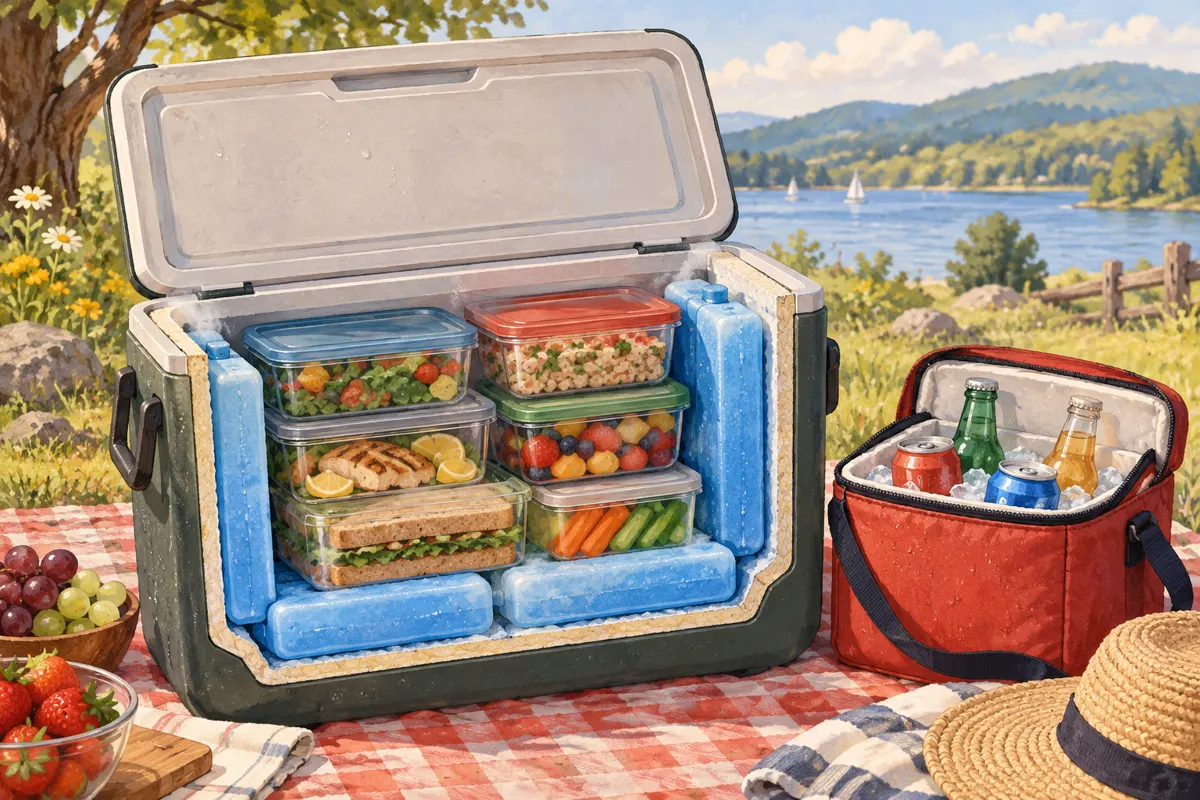
Pack chilled picnic food in sealed, rigid containers, surround it with frozen ice packs or sealed frozen water bottles, and place the items you will serve first near the top. Keep drinks in a separate cooler when possible. This arrangement keeps loose meltwater away from lunch and helps you find what you need without unpacking everything.
Prepare the cooler and lunch before departure
Start with a clean cooler and food that is already refrigerated. A cooler holds cold more effectively when it does not have to cool warm drinks or freshly prepared dishes. Prepare and chill lunch ahead of packing, then transfer it from the refrigerator shortly before leaving.
- Wash the cooler, dry it, and check that the lid, zipper, and any drain closure fit securely.
- Prechill the interior with ice or frozen water bottles while you finish preparing for the trip.
- Remove the prechilling ice and water before loading lunch.
- Set out the filled food containers and frozen packs together so you can load the cooler in one pass.
Give food a reliable barrier against water
Use sealed food containers as the main defense against soggy lunch. A basket or open bin makes food easier to lift out, but it does not replace a watertight lid. Paper wrapping and cardboard packaging should not be the only protection between food and melting ice.
- Put sandwiches and other easily crushed food in rigid containers.
- Transfer dressing, salsa, and other liquids into suitable food-storage containers with secure screw tops.
- Pack cut fruit separately from bread and sandwiches so its juice stays contained.
- Wipe container rims before closing them, and check that each lid is seated all the way around.
- Label lids with the contents so similar containers are easy to identify from above.
Frozen packs and sealed frozen water bottles reduce loose meltwater inside the cooler. Use bottles suitable for freezing and follow their manufacturer’s filling instructions to allow for expansion. Sealed lunch containers still matter: condensation can wet their surfaces even when there is no loose ice.
Pack in the order you will serve
Before loading, decide what comes out first. Group the components of lunch together instead of scattering them between drinks and ice. Put sturdy containers lower down and protect soft food near the top. Arrange cold packs along the bottom and sides, with additional packs in available gaps.
Proposed packing diagram, viewed from the side: this layout suits a simple picnic of sandwiches, cut vegetables, dip, and fruit. Adapt the container positions to your cooler’s shape while leaving room for cold packs.
- Top, beneath the lid: protected sandwich containers and the vegetables and dip you will serve first.
- Middle: sturdy sealed containers holding fruit or other food for later.
- Sides and gaps: frozen packs or sealed frozen water bottles beside the food.
- Bottom: a flat base of frozen packs supporting the containers.
Make sure the lid closes fully without pressing on containers. If everything fits only when forced, remove unnecessary packaging or use another cooler. Keep plates, napkins, utensils, and shelf-stable snacks in a separate picnic bag to free space for food and cooling packs.
Separate drinks and keep lunch easy to reach
Drinks usually prompt more frequent opening than lunch. A separate drinks cooler lets people help themselves while the food cooler stays closed. Chill beverages before packing them, and identify which cooler holds drinks so nobody has to open both.
If you have one cooler, give drinks their own accessible side and group lunch containers on the other. Avoid burying bottles beneath sandwiches. At the park, place the cooler in shade and take out the containers needed for serving together, then close the lid promptly.
Check the load before driving to the park
A final check should answer two questions: can anything leak, and can you reach lunch without digging? Keep the cooler upright during the drive and place it where other bags will not tip it over or obstruct access.
- Food and drinks are chilled; cooling packs are frozen.
- Every food container is closed securely, with liquids upright.
- Delicate food has a rigid container and nothing heavy pressing on it.
- First-to-serve items are visible and reachable.
- Drinks are separate or grouped on one accessible side.
- The cooler lid closes fully, and the drain closure is secure.
- Serving supplies are packed in the picnic bag.