How to set up a homework station that packs away after dinner
· Editorial team atlantanewsdaily7.com
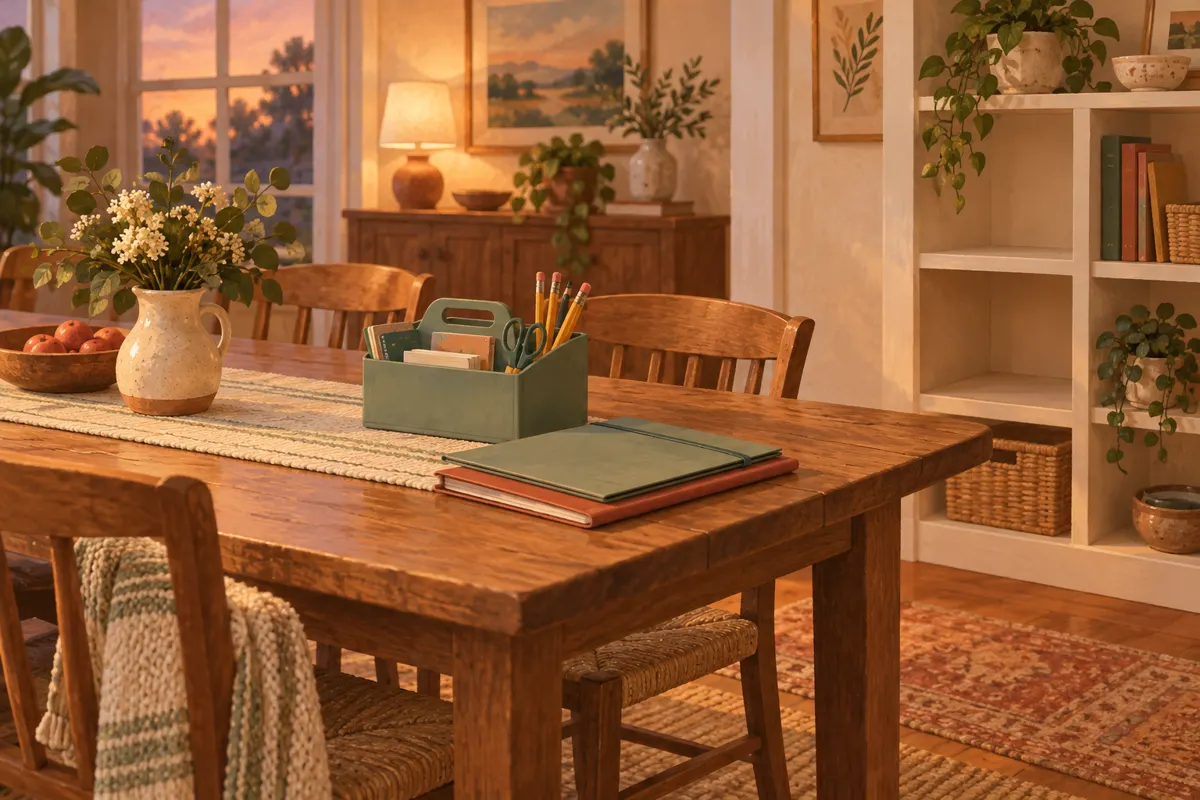
Keep dining-table homework supplies in one portable caddy, give papers a few clearly defined folders, and choose a nearby shelf where everything goes between sessions. Bring out only what the assignment needs, then pack it away before setting the table for dinner. The proposed setup below uses containers you may already have and gives unfinished work a place to wait.
Choose a storage spot before filling the caddy
Start with the destination: a cabinet, shelf, or section of a sideboard close to the dining table. Clear enough room for the supply container and a folder holder. Nearby storage keeps setup straightforward and gives every item a specific place to return.
Next, check the working space. Your child needs room for an open book and paper, a usable chair, and enough light to see the page clearly. If the table has a rough surface, add a smooth portable writing board that can slide into storage with the folders.
As a practical starting proposal, reserve one seat for homework and one nearby storage space for the kit. Before choosing a container, check that it fits that space and that your child can carry it comfortably when filled.
Build a small kit of everyday supplies
A handled caddy, shallow tray with sturdy cups, or small box can hold the essentials. Group similar items so children can see what is available and put it back without sorting through a mixed pile. Start with supplies their assignments actually require; ask the teacher if you are unsure.
- Sharpened pencils, an eraser, and a pencil sharpener with a shavings container.
- Pens or highlighters if used for schoolwork.
- A ruler, glue stick, and age-appropriate scissors when needed.
- A small selection of colored pencils or markers.
- A slim folder of blank writing paper and scratch paper.
Keep spare packs and occasional project materials on the storage shelf. Bring out a calculator, larger art supplies, or other tools for the assignment that calls for them. If the container becomes difficult to carry or items hide underneath one another, reduce its contents.
Give loose papers a clear next step
Paper needs its own system so worksheets and permission slips do not disappear beneath supplies. A magazine file or upright folder holder can sit beside the caddy and move with it. Keeping papers awaiting a signature separate from signed papers is one useful approach described in the supplied organizing examples.
- Working on: unfinished worksheets and notes needed for the next homework session.
- Adult action: forms to sign, notices to read, or questions that need help.
- Return to school: completed work and signed forms ready for the backpack.
For siblings, use a separate working folder for each child. Keep blank paper apart from school documents. During cleanup, move anything ready for school into the appropriate backpack; the return folder can hold items that are waiting for that transfer.
Make setup and cleanup part of homework
Agree on when the table needs to be available for dinner before homework starts. If work must continue afterward, use the working folder to preserve it. A proposed routine is to have the child unpack and repack the station, with adult help as needed.
- Clear the homework seat and bring the caddy and folders to the table.
- Take out the current assignment, its book, and the supplies it needs.
- Before stopping, mark the next question or page with a bookmark or sticky note.
- Sort papers into their folders and put completed work in the backpack.
- Return tools to the caddy, collect scraps and pencil shavings, and carry the kit to its shelf.
After dinner, the child can reopen the working folder and resume at the marked place. Avoid putting unfinished work into an unsorted stack just to clear the table.
Adjust the station to your household
A shared table may suit a child who likes having an adult nearby, but kitchen activity can also interrupt concentration. Consider your child's preferences and the household's dinner routine. If cooking, television, or conversation makes a particular task difficult, the portable kit can move to another suitable surface.
As a maintenance proposal, check the kit once a week: sharpen pencils, replace missing essentials, review the adult-action folder, and remove papers no longer needed. If cleanup repeatedly stalls, identify what has no clear home and give it one. Keep the routine simple enough for your child to repeat.