How to create a grab-and-go system for shared-car errands
· Editorial team atlantanewsdaily7.com
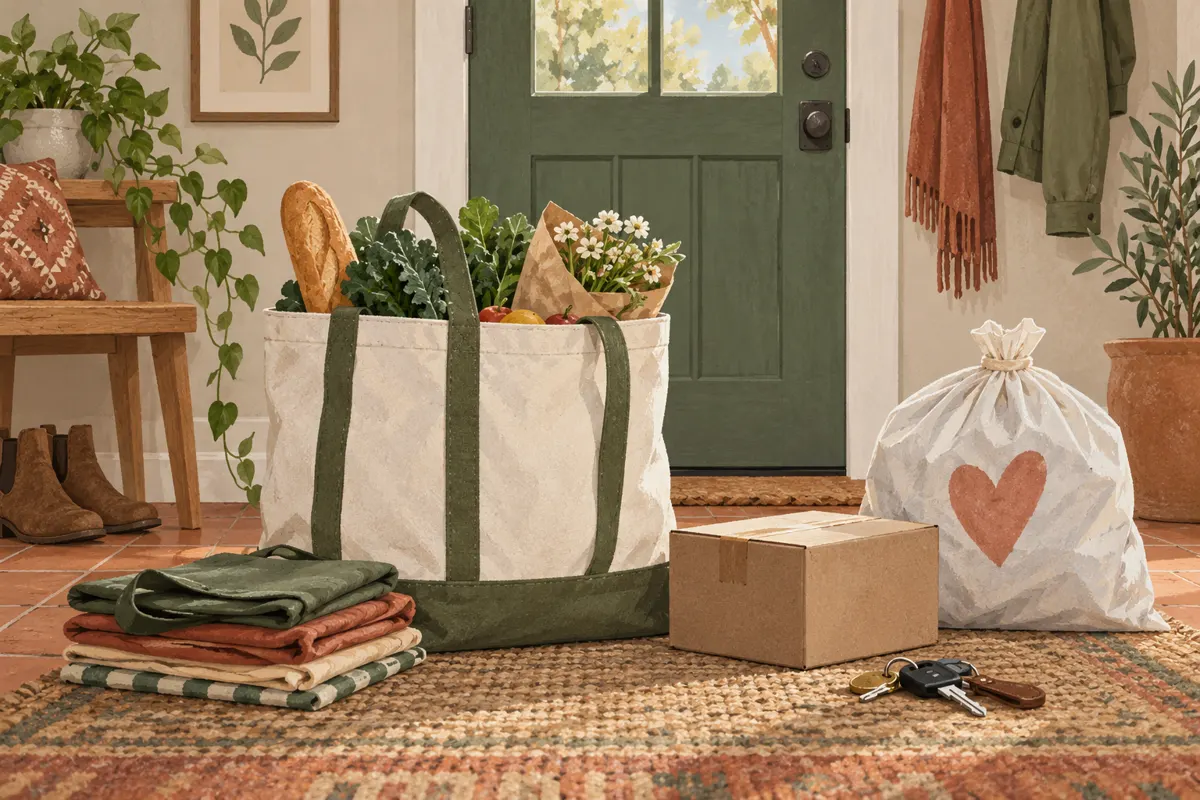
Keep one reusable errands tote near the door, use a shared list to decide what goes on each trip, and reset the tote when you return. For a household sharing one car, this proposed routine gives both drivers a clear place to find returns, shopping bags, and drop-off items without turning the vehicle into permanent storage.
Give outgoing errands one home
Choose a spot everyone passes on the way out: a shelf by the door, a hallway basket, or a corner of a closet. Put a tote you already own there. It should be easy to carry and leave room for purchases coming home. Keep the spot clear enough that tomorrow’s return does not disappear under unrelated belongings.
Use the tote for small outgoing items and folded reusable bags. Place bulky donations beside it, with a note on the shared list. Keep each return together with whatever that particular return requires, such as its packaging, receipt, or return code. Check the retailer’s instructions before calling the item ready.
- Folded reusable shopping bags.
- Ready-to-go returns, each with its required paperwork or a reminder to access the digital code.
- Small drop-off items, separated from returns.
- A note identifying any larger bag or box waiting beside the tote.
Match the errands to the next car trip
Keep one shared errand list in a notebook or a phone note that both drivers can access. For each task, record the destination, what needs to travel, who will handle it, and any relevant deadline. Separate items that are ready from those still waiting for packing, paperwork, or a decision.
Before taking the car, choose the stops that fit the trip and the next person’s need for the vehicle. Check opening hours and drop-off requirements when relevant. A donation bag can stay at home if its destination does not fit today’s route; adding it to every trip only creates more unloading.
For example, a driver heading out for groceries could take a ready return if that stop fits the available time. The other driver might handle donations on a later trip. Assigning each task makes it clear who is taking responsibility and helps avoid both drivers assuming the other has finished it.
Use a short departure checklist
Keep the checklist beside the tote or at the top of the shared note. Read it before leaving the house, while missing items are still easy to collect. Make it short enough to use even when the trip is hurried.
- Confirm who has the car and when the next driver needs it.
- Choose today’s stops from the shared list.
- Check that each return or drop-off is ready and its destination is available.
- Take the tote, reusable bags, and any larger items listed for this trip.
- Check that you have the keys and any phone, payment method, or paperwork needed for the stops.
If something is missing, leave that errand marked as waiting rather than relying on memory. Load the selected items where they will stay secure and leave the driver’s controls and view clear.
Make the driver handoff explicit
Give the next driver a brief update whenever the car changes hands. Cover where the keys are, whether anything remains in the vehicle, which errands are complete, and any change to the agreed return time. Use the shared note if you will not see each other.
A useful handoff might say: “Keys are on the hook. Groceries are unloaded and the return is done. The donation bag is still by the door for your trip.” If a stop was skipped, leave it open on the list and explain what still needs doing.
Reset the tote after each trip
Finish the routine when you arrive home. The Declutter Hub’s car-organizing discussion recommends removing rubbish and putting belongings back after journeys. Apply that small, regular reset to the errands tote so the next driver can see what is ready. The Declutter Hub
- Unload purchases and take personal belongings and trash out of the car.
- Mark completed errands on the shared list.
- Return unfinished items to the outgoing spot and note why they are still waiting.
- Put receipts or other records where the household keeps them.
- Refold reusable bags and return the tote to its usual place.
If the tote keeps overflowing, review the waiting items before adding another container. Give each one a next step: prepare it, assign it to a trip, or remove it from the queue if it no longer needs to go.